All applications

Application-Based Project Review

Industrial Machinery & Wear Protection

Industrial wear parts should be defined from the actual contact position, motion, load, abrasive medium, mating surface, lubrication and attachment. The hardest grade is not automatically the safest choice where impact, misalignment or unsupported geometry is present.

Industrial Machinery & Wear Protection

Application map: equipment, parts and service conditions

This map connects the process or equipment position with representative carbide components, common failure mechanisms, material-review direction and practical supply form. It is a project review guide, not a universal specification.

Process / equipmentPosition and functionRepresentative componentsMain service risksMaterial review directionTypical supply route
Guiding, locating and sliding systemsReplaceable contact surface that maintains alignment or supports repeated motionGuide bushes, sleeves, liners, rails, pads and locating insertsSliding wear, fretting, misalignment, contamination and clearance growthReview load, motion, lubrication, counterface, contamination and allowable clearanceSintered sleeve, ground bore/OD, lapped or polished face, press-fit or drawing-based part
Wear liners and material handlingSacrificial surface in chutes, mixers, feeders, conveyors and abrasive process equipmentWear plates, tiles, blocks, bars, strips and carbide-steel assembliesSliding abrasion, particle impact, edge spalling, detachment and localized wearMatch handled material, particle size, impact angle, substrate support and attachment methodWear blank, cut plate or strip, brazing-ready insert, mounted tile or replacement assembly
Precision pins, shafts and repeat-cycle componentsHigh-contact positioning, forming, dosing or motion component in production equipmentPins, shafts, plungers, punches, mandrels and precision wear componentsDiameter loss, bending or compression load, edge damage, galling and fatigueReview contact pressure, unsupported length, cycle rate, alignment, finish and mating partBlank, centerless-ground shaft, ground feature, polished surface or finished component
Drawing-based replacement and special wear partsCustomer-defined wear zone where standard catalogue parts do not fit the equipmentCustom inserts, nozzles, rings, blocks, profiles and multi-material componentsUnknown failure cause, changing revisions, difficult geometry and inconsistent prior supplyStart from the worn sample, drawing, current grade, failure surface and actual service cycleTrial blank, semi-finished part, finished component, selected assembly or repeat batch

What should be reviewed for this application

The application name is only a starting point. Material direction and manufacturing route should be reviewed against the actual load, wear pattern, geometry, mating parts and downstream processing.

Industrial wear projects should begin with the actual contact position, motion, load, abrasive medium, counterface, lubrication and attachment. A hard grade is not automatically the safest choice where impact, misalignment or unsupported geometry can cause edge damage or fracture. Worn samples, wear maps and mating-part information help distinguish material loss, galling, chipping and fit-related failures.

What Defines the Requirement

  • Contact motion, load, cycle rate and supported or unsupported geometry
  • Abrasive material, contamination, temperature and observed wear pattern
  • Counterface, lubrication, clearance, fit and attachment method
  • Current material, failure mode, critical dimensions and surface requirements

How MPC Can Support the Project

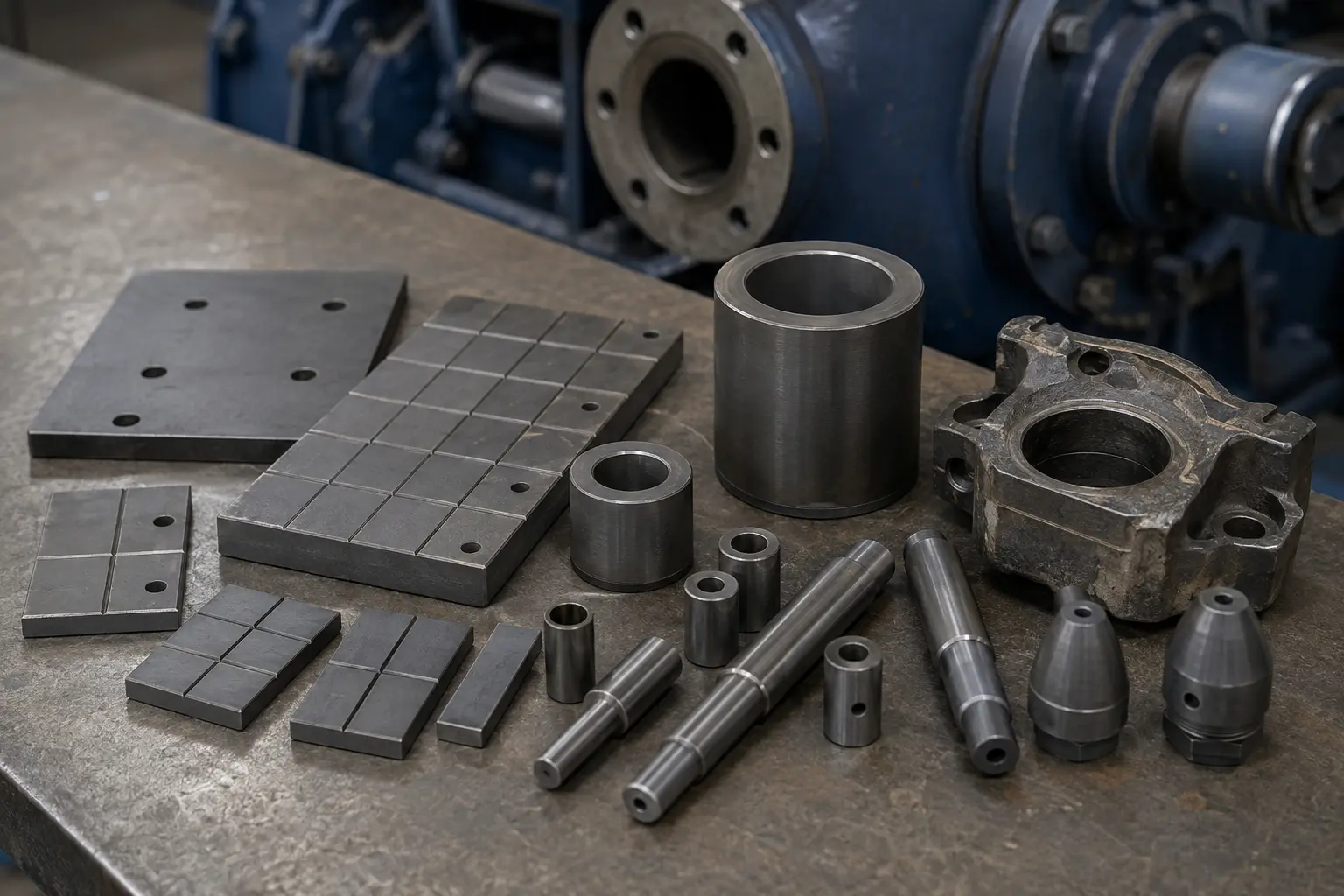
MPC manufactures carbide wear plates and blocks, bushings and sleeves, pins and shafts, nozzles and custom components. Trial and repeat production can be reviewed from a drawing, redacted sample or worn part.

Related Product Families

Manufacturing and inspection references

Manufacturing Built Around the Product Requirement

Our role is broader than supplying a catalogue item. We review how the material, product form, manufacturing route and acceptance requirements fit the intended application.

Review manufacturing approach →

Quality, Testing & Traceability

Quality requirements are tied to the product and order. We do not present one property table or one inspection plan as suitable for every material family.

Review materials & quality →

Useful Information for an Initial Review

An exhaustive specification is not required at the first stage. The following information is normally enough to begin:

  • Drawing, sketch, dimensions or redacted sample photos
  • Current material, grade, composition direction or reference product
  • Application, workpiece and relevant service conditions
  • Critical dimensions, tolerances and surface requirements
  • Trial quantity and expected repeat or batch quantity
  • Required tests, standards, reports, packing and delivery destination

Discuss This Application

Send the application, product family, current material or drawing and requested quantity. We will review a practical manufacturing and supply route.