All applications

Application-Based Project Review

Mining, Drilling & Excavation

Mining and drilling components operate under combinations of abrasion, impact, compression, heat and variable ground conditions. Material direction and geometry should therefore be reviewed together with the tool body and attachment method.

Mining, Drilling & Excavation

Application map: equipment, parts and service conditions

This map connects the process or equipment position with representative carbide components, common failure mechanisms, material-review direction and practical supply form. It is a project review guide, not a universal specification.

Process / equipmentPosition and functionRepresentative componentsMain service risksMaterial review directionTypical supply route
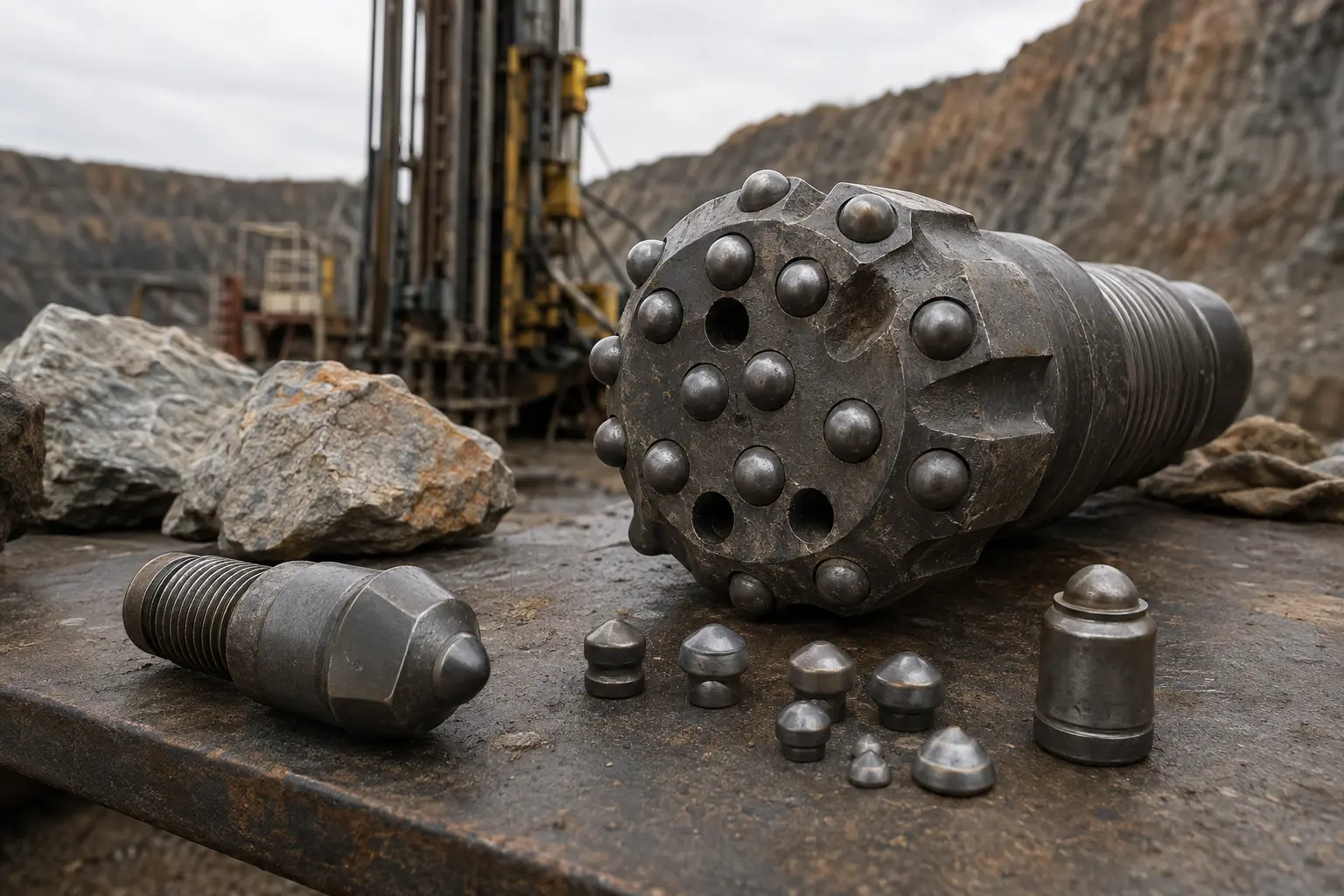
Top-hammer, DTH and rotary drillingRock-contacting insert in the drill bit for crushing and cutting the formationSpherical, ballistic and conical buttons; drill tips and custom insertsRepeated impact, abrasive wear, button fracture, heat and loss of retentionMatch rock strength and abrasiveness, impact level, button shape and interference or brazed fitSintered button, ground fit area, selected edge preparation or drawing-based insert
Road milling, trenching and excavationReplaceable cutting tip and wear-protection area on picks and ground-engaging toolsPick tips, trenching tips, wear buttons, plates and custom protection partsMixed impact and abrasion, thermal shock, braze failure and uneven wearReview pavement or ground type, machine power, pick rotation, attachment and wear patternBrazing tip, pick carbide component, preassembled selected part or custom wear blank
HPGR, crushing and mineral processingWear-protection element on roll surfaces and high-pressure comminution zonesHPGR studs, edge blocks, wear tiles and custom crushing componentsHigh compression, abrasive ore, stud breakage, pull-out and edge-zone wearMatch ore, feed size, pressure, roll design, stud geometry and installation methodSintered stud, ground interface, wear block or drawing-based protection component
General mining and earthmoving wear protectionLocalized wear zone in loaders, scrapers, conveyors and mineral-handling equipmentWear inserts, buttons, bars, plates and custom carbide-steel assembliesSliding abrasion, impact, misalignment and concentrated edge wearUse the observed wear map, substrate, attachment and impact severity to define the carbide directionInsert or wear blank, brazing-ready part, selected assembly or repair replacement component

What should be reviewed for this application

The application name is only a starting point. Material direction and manufacturing route should be reviewed against the actual load, wear pattern, geometry, mating parts and downstream processing.

Rock or ground abrasiveness must be considered together with impact, compression, temperature and the way the carbide is retained in the tool body. A direction optimized only for hardness may wear slowly but remain vulnerable to chipping or fracture under shock. Current wear patterns, broken samples, retention method and drilling or crushing conditions help define the practical balance between wear resistance and toughness.

What Defines the Requirement

  • Rock, ore or ground abrasiveness, hardness and impact conditions
  • Drilling, crushing, milling, trenching or excavation method
  • Insert retention, brazing, interference fit or mechanical attachment
  • Current wear pattern, fracture mode and expected service-life target

How MPC Can Support the Project

MPC manufactures mining buttons, drill tips, road-milling picks, HPGR studs, excavation components and custom carbide wear parts. Trial and batch supply can be reviewed from a drawing, sample or current product reference.

Related Product Families

Manufacturing and inspection references

Manufacturing Built Around the Product Requirement

Our role is broader than supplying a catalogue item. We review how the material, product form, manufacturing route and acceptance requirements fit the intended application.

Review manufacturing approach →

Quality, Testing & Traceability

Quality requirements are tied to the product and order. We do not present one property table or one inspection plan as suitable for every material family.

Review materials & quality →

Useful Information for an Initial Review

An exhaustive specification is not required at the first stage. The following information is normally enough to begin:

  • Drawing, sketch, dimensions or redacted sample photos
  • Current material, grade, composition direction or reference product
  • Application, workpiece and relevant service conditions
  • Critical dimensions, tolerances and surface requirements
  • Trial quantity and expected repeat or batch quantity
  • Required tests, standards, reports, packing and delivery destination

Discuss This Application

Send the application, product family, current material or drawing and requested quantity. We will review a practical manufacturing and supply route.