All applications

Application-Based Project Review

Steel Rolling, Drawing & Forming

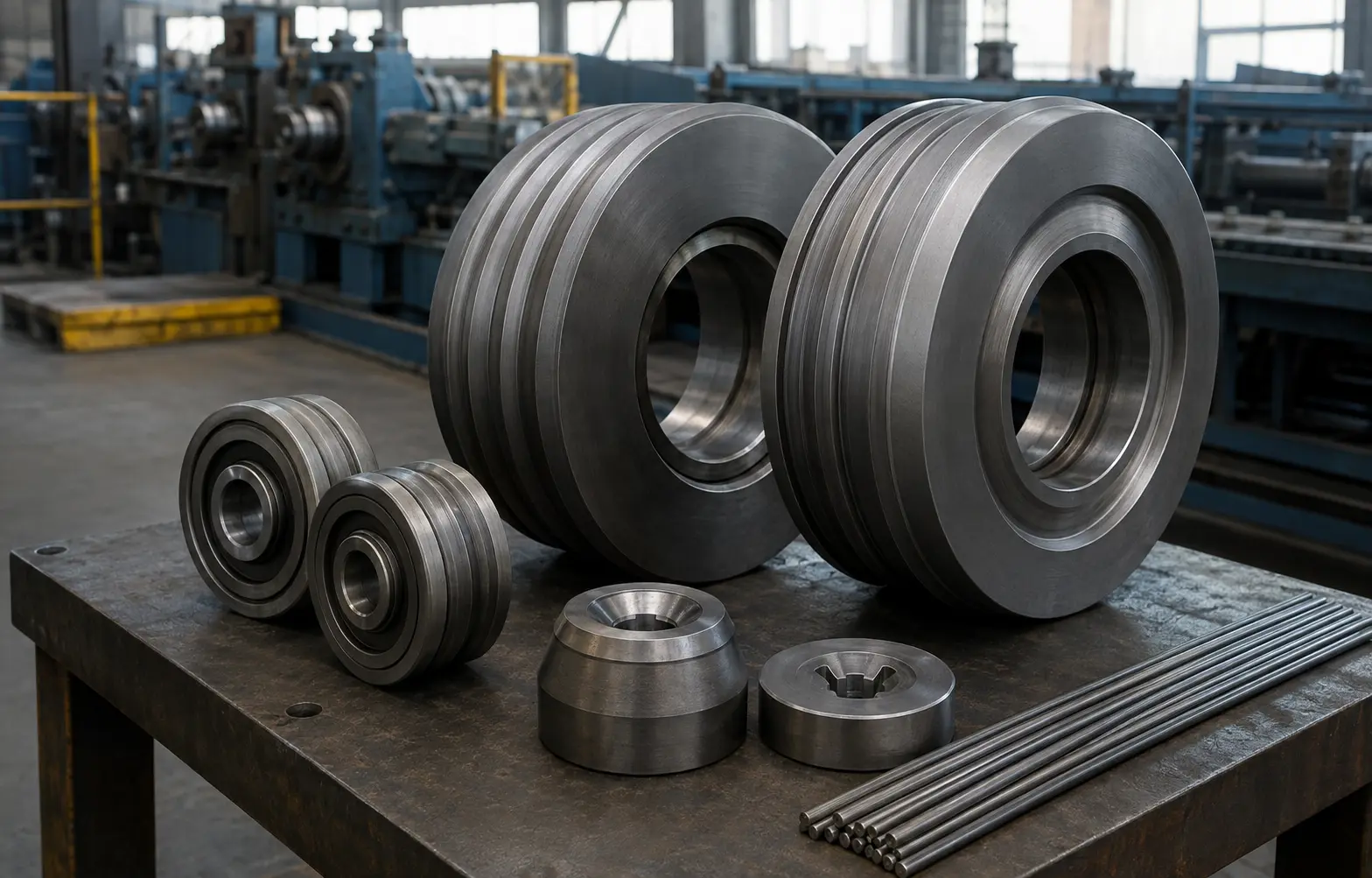
Rolling and forming applications require control of groove wear, dimensional stability, load, cooling and the balance between hardness and toughness. Stand position and processed material are important parts of the material review.

Steel Rolling, Drawing & Forming

Application map: equipment, parts and service conditions

This map connects the process or equipment position with representative carbide components, common failure mechanisms, material-review direction and practical supply form. It is a project review guide, not a universal specification.

Process / equipmentPosition and functionRepresentative componentsMain service risksMaterial review directionTypical supply route
Wire and rod drawingSizing and reduction zone that contacts wire as it passes through the dieDrawing-die nibs, shaped die blanks, guide bushes and wear insertsBore wear, scoring, material pickup, cracking and loss of wire size or finishMatch wire material, reduction, speed, lubrication, bore profile and wear or fracture prioritySintered nib, rough-cored blank, ground bore, polished die or drawing-based component
Bar, rebar and wire rollingGrooved working surface that forms and sizes the rolled productCarbide roll rings, composite rolls, groove rolls and ringsGroove wear, thermal fatigue, cracking, overload and dimensional driftReview stand position, rolled material, reduction, speed, cooling, groove and loadRing blank, bored or ground ring, machined groove or finished roll assembly
Tube, profile and mill guidanceGuide, straighten or support material before, between or after forming standsGuide rolls, straightening rolls, sleeves, bushes and mill wear componentsEdge wear, surface marking, misalignment, impact and bearing-interface damageMatch product profile, contact pressure, speed, cooling, alignment and required surface conditionRoll or sleeve blank, finish-ground component, assembled unit or drawing-based replacement
Punching, extrusion and formingWorking cavity, punch, insert or guide that shapes material under compressive loadPunching dies, forming dies, extrusion inserts, punches and tooling componentsAdhesive and abrasive wear, edge chipping, compression cracking and dimensional lossReview formed material, load, stroke, lubrication, unsupported edge and required finishSintered blank, EDM-ready block, pre-machined insert, ground die or finished tooling part

What should be reviewed for this application

The application name is only a starting point. Material direction and manufacturing route should be reviewed against the actual load, wear pattern, geometry, mating parts and downstream processing.

Material review depends on the processed steel or wire, stand position, reduction, speed, load, cooling and the actual groove or die geometry. Abrasive wear, cracking, thermal fatigue, edge damage and loss of dimensional control point to different material and design priorities. The quotation should also define whether the requirement is for a blank, a pre-machined part, a ground groove or a finished assembly.

What Defines the Requirement

  • Wire, bar, rebar, tube, strip or formed-product material
  • Stand position, rolling speed, load, reduction and cooling conditions
  • Groove, bore, interface, die or guide geometry and finish
  • Current wear, cracking, thermal fatigue or dimensional-loss pattern

How MPC Can Support the Project

MPC manufactures carbide roll rings, composite and three-dimensional rolls, guides, drawing and forming dies, plates, blocks and drawing-based wear components. Blanks and finished supply conditions can be discussed.

Related Product Families

Manufacturing and inspection references

Manufacturing Built Around the Product Requirement

Our role is broader than supplying a catalogue item. We review how the material, product form, manufacturing route and acceptance requirements fit the intended application.

Review manufacturing approach →

Quality, Testing & Traceability

Quality requirements are tied to the product and order. We do not present one property table or one inspection plan as suitable for every material family.

Review materials & quality →

Useful Information for an Initial Review

An exhaustive specification is not required at the first stage. The following information is normally enough to begin:

  • Drawing, sketch, dimensions or redacted sample photos
  • Current material, grade, composition direction or reference product
  • Application, workpiece and relevant service conditions
  • Critical dimensions, tolerances and surface requirements
  • Trial quantity and expected repeat or batch quantity
  • Required tests, standards, reports, packing and delivery destination

Discuss This Application

Send the application, product family, current material or drawing and requested quantity. We will review a practical manufacturing and supply route.