All applications

Application-Based Project Review

Valves, Pumps, Sealing & Flow Control

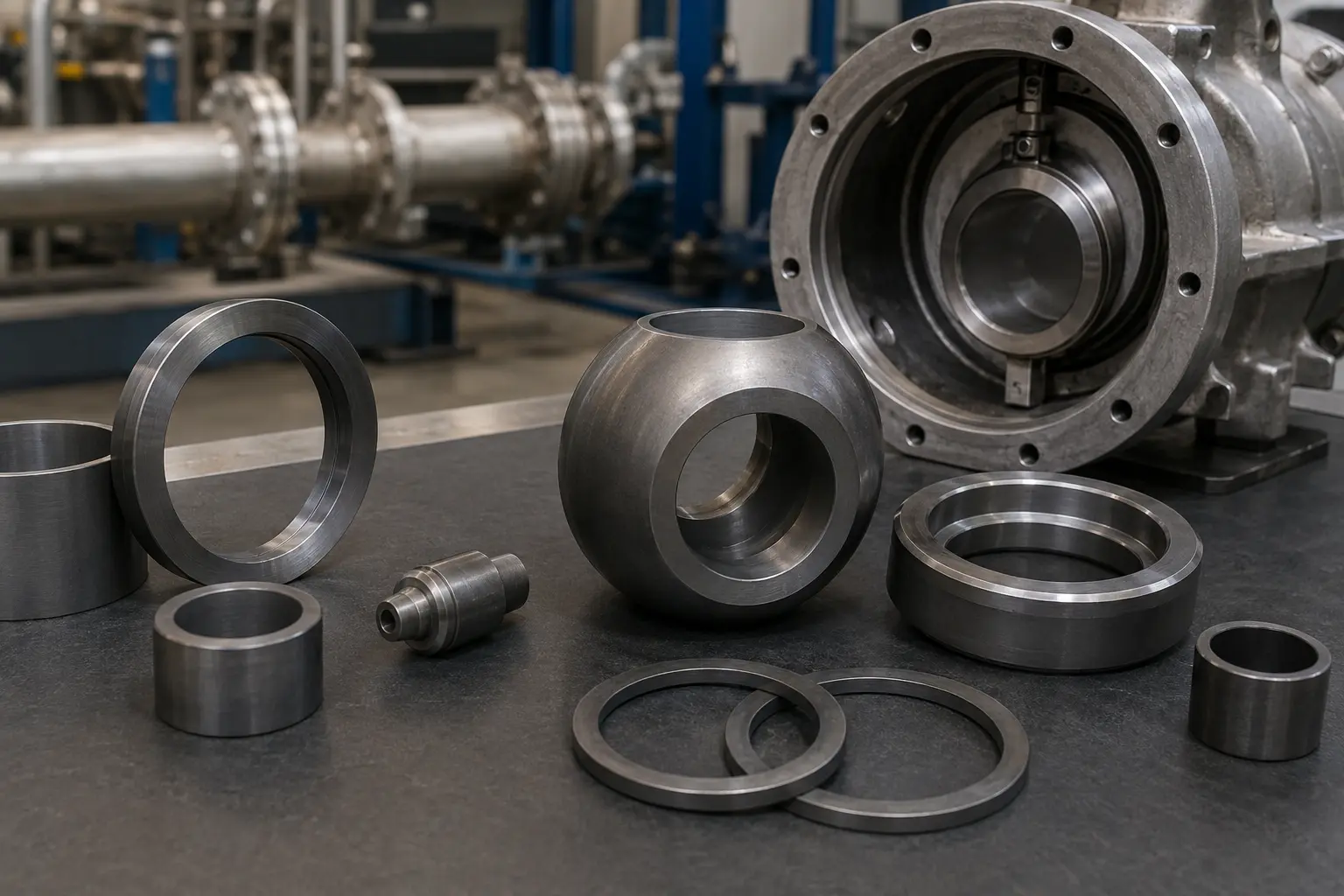
Flow-control components can face abrasion, erosion, pressure, corrosion, temperature and sealing-surface requirements at the same time. The carbide, binder, coating and finish must be reviewed for the actual medium and mating parts.

Valves, Pumps, Sealing & Flow Control

Application map: equipment, parts and service conditions

This map connects the process or equipment position with representative carbide components, common failure mechanisms, material-review direction and practical supply form. It is a project review guide, not a universal specification.

Process / equipmentPosition and functionRepresentative componentsMain service risksMaterial review directionTypical supply route
Valve shut-off and throttlingMating sealing or flow-control surfaces exposed to pressure and repeated cyclingValve seats, balls, plugs, stems, cages and trim componentsErosion, cavitation, leakage-path wear, impact and corrosion-assisted binder attackMatch medium, solids, pressure drop, temperature, cycle and mating materialCarbide blank, ground seat or trim, lapped sealing surface or assembled selected component
Pump sealing and shaft supportRotating or stationary sealing, bearing and guidance position around shaftsSeal rings, bushings, sleeves, thrust parts and bearing componentsAbrasive wear, dry running, thermal distortion, edge damage and loss of clearanceReview fluid, lubrication, speed, pressure, mating face, clearance and surface finishRing or sleeve blank, finish-ground bore/OD, lapped face or drawing-based part
Spray, dispensing and flow restrictionOrifice and metering surface controlling jet, spray pattern, dose or pressureNozzles, orifice inserts, needles, seats, poppets and restrictorsOrifice enlargement, jet erosion, clogging abrasion, seat wear and corrosionMatch media chemistry, particle size, flow velocity, pressure, orifice geometry and cleanabilityNozzle blank, precision bore, finished insert, lapped seat or component assembly
Slurry and abrasive-fluid handlingHigh-wear passage, liner, choke or change-of-direction area in process equipmentLiners, sleeves, choke inserts, wear rings, plates and custom flow partsParticle erosion, sliding abrasion, cavitation, localized impact and corrosionUse solids concentration, particle shape, velocity, angle of impingement and shutdown cyclesWear blank, machined flow component, carbide-steel assembly or coating-related finished part

What should be reviewed for this application

The application name is only a starting point. Material direction and manufacturing route should be reviewed against the actual load, wear pattern, geometry, mating parts and downstream processing.

The working medium, solids content, pressure, velocity, temperature, corrosion direction and mating material all influence carbide selection. Binder system, wear resistance, toughness, sealing geometry, clearance and surface condition should be considered together rather than as isolated values. Where possible, include the current wear or corrosion mode and state whether the part runs dry, lubricated or in direct fluid contact.

What Defines the Requirement

  • Fluid, slurry, solids content, corrosion direction and temperature
  • Pressure, velocity, cavitation, erosion and operating cycle
  • Mating material, sealing geometry, fit and surface-finish requirement
  • Finished component, carbide blank or coating-related supply condition

How MPC Can Support the Project

MPC manufactures carbide valve and flow-control parts, seal rings, bushings, sleeves, nozzles and custom wear components. Surface-engineering materials and coating-related finished components can also be reviewed where applicable.

Related Product Families

Manufacturing and inspection references

Manufacturing Built Around the Product Requirement

Our role is broader than supplying a catalogue item. We review how the material, product form, manufacturing route and acceptance requirements fit the intended application.

Review manufacturing approach →

Quality, Testing & Traceability

Quality requirements are tied to the product and order. We do not present one property table or one inspection plan as suitable for every material family.

Review materials & quality →

Useful Information for an Initial Review

An exhaustive specification is not required at the first stage. The following information is normally enough to begin:

  • Drawing, sketch, dimensions or redacted sample photos
  • Current material, grade, composition direction or reference product
  • Application, workpiece and relevant service conditions
  • Critical dimensions, tolerances and surface requirements
  • Trial quantity and expected repeat or batch quantity
  • Required tests, standards, reports, packing and delivery destination

Discuss This Application

Send the application, product family, current material or drawing and requested quantity. We will review a practical manufacturing and supply route.