
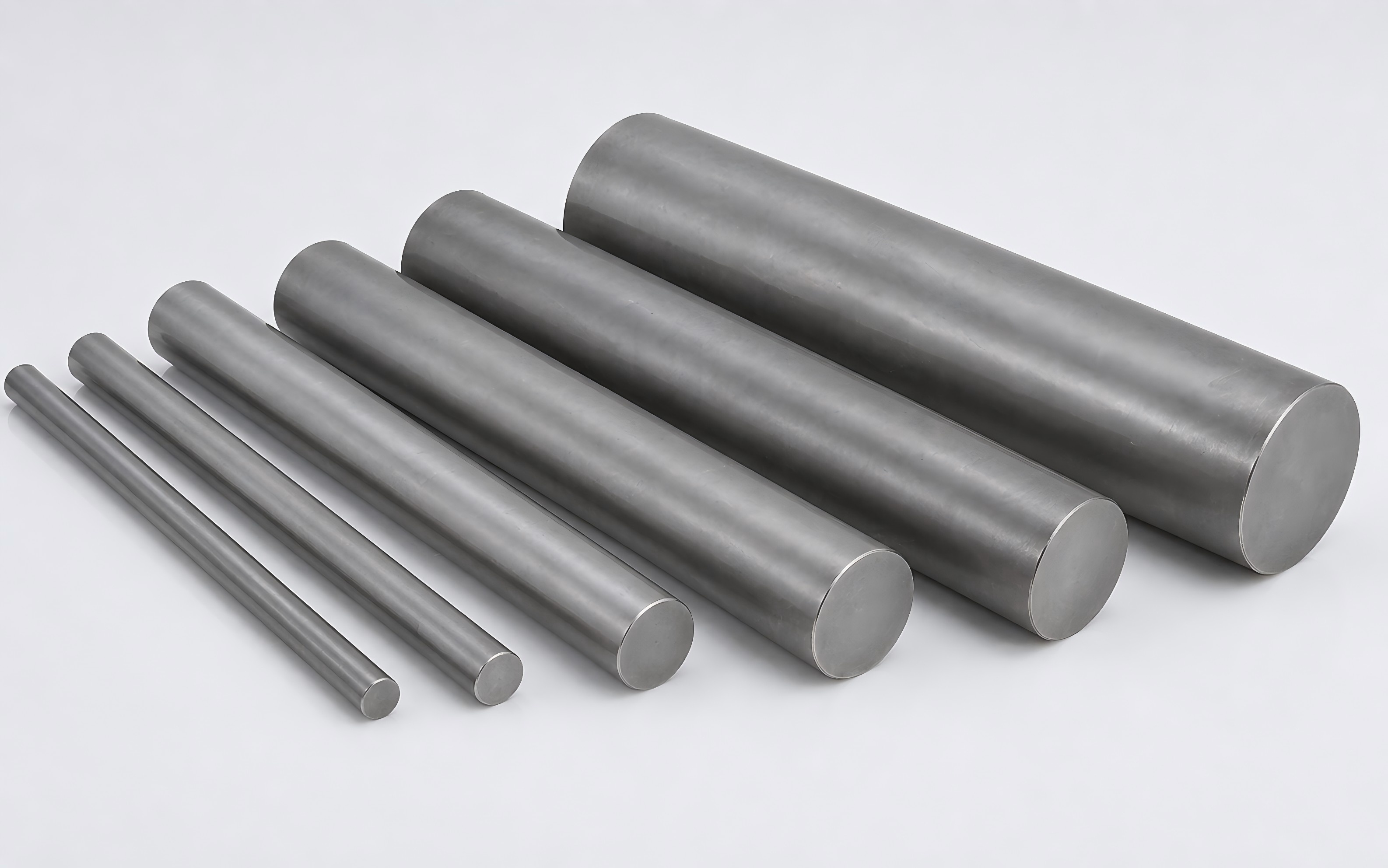
Carbide Rods & Tool Blanks
Carbide rods and tool blanks are used for drills, end mills, reamers, deep-hole tools, wear-resistant parts, and precision industrial components.
Micro-Precision Carbide supports standard and custom carbide rod requirements based on diameter, length, grade requirement, tolerance, quantity, and application details.
Available Rod Forms
- Solid carbide rods in sintered, ground, and agreed semi-finished conditions
- Rods with straight or helical coolant holes according to the confirmed design
- Deep-hole drill blanks and other tool-specific blanks
- Metric, imperial, cut-length, and drawing-based dimensions
- Round rods, stepped blanks, and special profiles reviewed by drawing
The online range is representative rather than an exhaustive size table. Diameter, length, coolant-hole geometry, straightness, diameter tolerance, surface condition, and end preparation are confirmed for the requested item.
Key Features
- Carbide rods for machining and tool production
- Solid rods, coolant-hole rods, and deep-hole drill blanks
- Support for standard and custom dimensions
- Suitable for cutting tools and wear-resistant components
- Drawing-based and sample-based quotation support
- Practical communication based on grade and application requirements
- Support for rods used as blanks or shaft-type carbide components
Customization Support
We can discuss diameter, length, grade requirement, tolerance, surface condition, quantity, and intended application before quotation. If rods are used for cutting tool production or further machining, please include machining plan and final application if available.
Typical Applications
- Cutting tool blanks
- Wear-resistant components
- Precision machining
- Industrial rods and shaft-type parts
- Custom carbide rod projects
- Further machining and tool manufacturing
Quotation Information
For faster quotation, please provide:
- Diameter and length
- Tolerance and surface requirements
- Grade requirement
- Quantity
- Drawing or size requirement
- Machining or tool production use
- Application details
FAQ
Can you support custom requirements?
Yes. Custom requirements can be discussed based on drawings, samples, dimensions, tolerance, grade requirements, quantity, and intended application.
Can sample references be used?
Yes. Where applicable, sample-based communication can help clarify product shape, dimensions, structure, and application requirements.
What information is needed for quotation?
Drawings, dimensions, tolerance, grade requirement, quantity, and application details are helpful.