
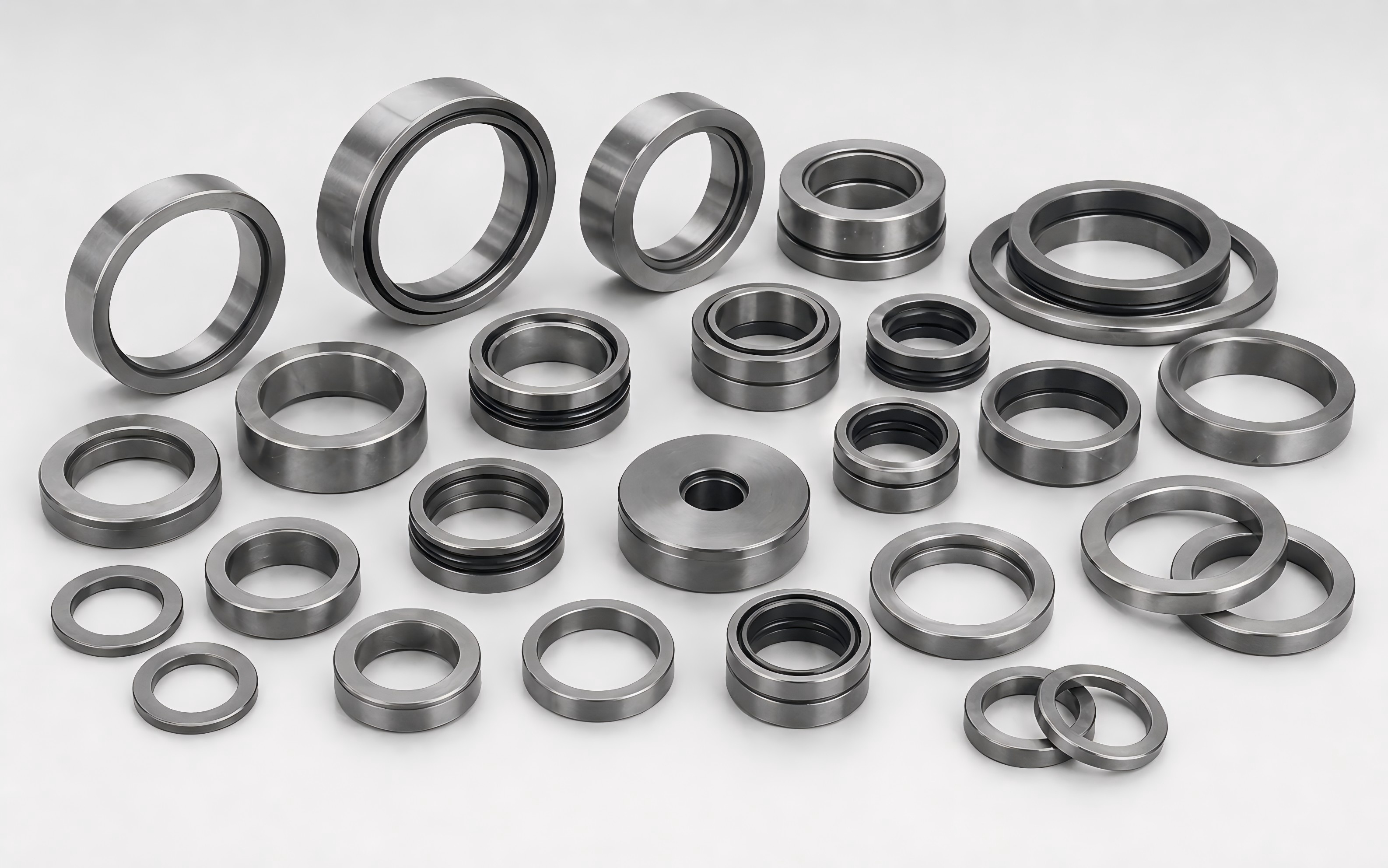
Carbide Seal Rings
Carbide seal rings are used in sealing systems where wear resistance, dimensional stability, and reliable performance are important under demanding working conditions. Micro-Precision Carbide supports carbide seal ring requirements based on drawings, dimensions, tolerance, material requirements, quantity, working medium, and application environment.
Key Features
- Carbide seal rings and sealing components
- Support for custom ID, OD, thickness, and tolerance
- Suitable for wear-resistant sealing applications
- Drawing-based quotation support
- Practical communication based on working conditions
- Support for surface finish and sealing face requirements
Customization Support
We can discuss inner diameter, outer diameter, thickness, tolerance, surface finish, flatness, sealing face requirements, quantity, material requirements, and working environment before quotation. If the seal ring works with abrasive media, corrosive fluid, high speed, pressure, or temperature conditions, please include this information in your inquiry.
Typical Applications
- Mechanical sealing systems
- Wear-resistant sealing components
- Pump and valve-related applications
- Chemical and industrial equipment
- Custom sealing projects
- High-wear and corrosion-related sealing environments
Quotation Information
For faster quotation, please provide:
- Drawing or sample reference
- Required shape and dimensions
- Tolerance and surface requirements
- Quantity
- Working medium and working environment
- Material or grade requirements
- Sealing face or mating part information if available
FAQ
Can you manufacture this product according to drawings?
Yes. Drawing-based projects can be discussed depending on geometry, dimensions, tolerance, material requirements, quantity, and production feasibility.
Can sample references be used?
Yes. Where applicable, sample-based communication can help clarify product geometry, structure, surface condition, wear condition, and application requirements.
What information is needed for quotation?
Drawings, dimensions, tolerance, quantity, working condition, wear environment, material requirements, and application details are helpful.
Can surface requirements be discussed?
Yes. Surface finish, flatness, sealing face, and related technical requirements can be discussed according to the application.